Manual.ly Logo

JBL Aquaristic ProAquaTest Lab Navod

0,0 · 0 Hodnocení

PDF manuál · 65 Stránky

čeština

M: QW-35-FL
stránka

/ 65

Loading...
20bbaef5bdec311f8d8e156c4e1fe9d6e449 page 9
16 17
deciency. Iron and some other trace elements are only sta-
ble in water for a limited time, even if they are bound to so-
called chelators, as is usual in modern fertilisers. In addition
any tap water added is usually iron-free. Therefore, the iron
content needs to be monitored regularly with this test and re-
plenished if necessary. Cncentrations as low as 0.1–0.2 mg/l
are sufcient for good plant growth. In very densely planted
aquariums, values of up to 0.6 mg/l can also be useful. In
marine water, values of up to 0.05 mg/l are recommended.
Procedure:
1. Rinse both test vials several times with the water to be
tested.
2. Use the enclosed syringe to ll each of the test vials with
5 ml of sample water.
3. Add 5 drops of Fe reagent to one of the two test vials and
mix by swirling. Allow to stand for 10 minutes until the
colour has developed completely.
4. Place both test vials in the grey comparator block: Place
the vial with added reagent at the smooth end and the
vial with untreated sample water (blank sample) at the
notched end of the comparator block.
5. Place the comparator block with the two test vials on the
colour chart in such a way that the notch points to the
values and move it on the colour chart until the colour of
the sample mixed with reagents corresponds as closely
as possible to the colour under the blank sample.
6. Read the iron content in the notch of the comparator.
Note:If you decide to use the JBL PRO AQUATEST NH
4
at
the same time, make sure you don’t mix up the measuring
vessels of either set. Traces of the JBL PRO AQUATEST
NH
4
left inside the measuring vessel may result in too high
readings in the iron test.
Correcting deviating values:
Too low: Fertilise with ferrous fertilisers from the JBL ferti-
liser range (e.g. JBL Ferropol).
Too high: Carry out the corresponding partial water change.
JBL PRO AQUATEST K
Features: JBL PRO AQUATEST K is an easy-to-use turbid-
ity test for the routine monitoring of the potassium content in
fresh and marine water.
Why test? Potassium is one of the macroelements which is
very effectively absorbed within a few hours and temporarily
stored by plants in fresh water. Growing plants require more
potassium compared to other elements. As a result, potas-
sium concentrations can drop to a minimum range, causing
plant growth to stagnate, even if the aquarium water is ferti-
lised regularly. Potassium deciency initially leads to chloro-
tic spots on the edges of the leaf, which gradually increase
and then turn into grey-brown necroses. The leaves may
crinkle or curl. In Central European tap water, potassium is
usually a decient element compared to in natural biotopes
and this especially applies to calcium and magnesium con-
centrations. For good plant growth, the potassium content
needs to be at around 10 mg/l, in aquariums with high il-
lumination (e.g. in so-called scapes) up to 30 mg/l can be
useful. Higher potassium values in aquarium water encour-
age the growth of green thread algae. Potassium is present
in seawater in concentrations of about 380–400 mg/l, but is
only consumed in small quantities. Excessively high potas-
sium contents can be dangerous for sensitive animals such
as shrimps. The potassium content of the aquarium water
needs to be measured on a daily basis initially. This enables
the needs of the plants to be determined and the dosage of
the fertiliser can be carried out accordingly. Afterwards, rou-
tine measurements can be carried out after longer intervals.
Procedure:
Freshwater:
1. Rinse the measuring tube (plastic) and the tube (glass)
for the potassium content reading several times with the
water to be tested.
2. Using the syringe supplied, ll 15 ml of sample water into
the measuring tube.
3. Add 10 drops of reagent 1 and mix by swirling.
4. Add 1 large level measuring spoon (broad end of the
enclosed double-ended spoon) of reagent 2 and swivel
slightly for about 30 seconds until the powder has dis-
solved. The water becomes whitish and cloudy. Leave to
stand for 1 minute and then swirl slightly again.
5. Place the glass tube for reading the potassium content
reading on the cross of the colour card.
6. The following procedure should be carried out in bright,
diffuse light. Pour the´ turbid water from the measuring
tube into the reading tube until the turbidity means the
cross on the colour card is no longer visible from above.
7. The potassium content can now be read on the scale of
the tube (bottom of the meniscus).
Marine water:
1. Fill 10 ml sample water with distilled water to 300 ml.
2. Follow the same steps as for fresh water.
3. Multiply the test result by a factor of 30.
Correcting deviating values:
Too low: In freshwater aquariums fertilise with potassium-
containing fertilisers from the JBL ProScape range. We do
not recommend an additional dosage in marine water be-
cause potassium is toxic for various organisms.
Too high: Repeat the measurement after 24 hours. If the
value is still too high, carry out the corresponding partial
water change.
JBL PRO AQUATEST Cu
Features: JBL PRO AQUATEST Cu is an easy-to-use color-
imetric test to routinely determine the copper content in fresh
and marine water aquariums, and in garden ponds. A com-
pensation method developed by JBL allows reliable results
to be obtained even in slightly discoloured water (caused by
peat ltering or disease treatment etc.).
Why test? Copper is a heavy metal which is on the one
hand indispensable as a trace element for plant and animal
organisms. On the other hand it has a devastating effect
as a cell poison (cytotoxin) above a certain concentration.
Copper mainly reaches the aquarium in tap water, as cop-
per pipes were often used for water installation. If the water
remains in such pipes for a longer period of time, consid-
erable amounts of copper can dissolve. The water in the
pipe should therefore be drained before use. For the same
reason, do not use rainwater that has owed over copper
gutters. And make sure the tools you use when setting up
your aquarium or pond are copper-free. A controlled entry
of copper takes place through the application of medications
against parasitic sh diseases, as well as with some algae-
killing agents. The copper concentrations prescribed for this
can be tolerated by sh for a certain time while parasites,
etc., start dying off immediately.
Please note: Copper quickly forms water-insoluble com-
pounds which form deposits on the ground. The JBL PRO
AQUATEST Cu only detects copper dissolved in water.
Procedure:
1. Rinse both test vials several times with the water to be
tested.
2. Use the enclosed syringe to ll each of the test vials with
5 ml of sample water.
3. Add 5 drops of reagent 1 to one of the two test vials and
mix by swirling. Then add 5 drops of reagent 2 and mix
again. Allow to stand for 15 minutes until the full colouring
develops.
4. Place both test vials in the grey comparator block: Place
the vial with added reagent at the smooth end and the
vial with untreated sample water (blank sample) at the
notched end of the comparator block.
5. Place the comparator block with the two test vials on the
colour chart in such a way that the notch points to the
values and move it on the colour chart until the colour of
the sample mixed with reagents corresponds as closely
as possible to the colour under the blank sample.
6. Read the copper content in the notch of the comparator.
Correcting deviating values:
Too low: The value should always remain below the detec-
tion limit (except for some special treatments).
Too high: Regular use of JBL water conditioners, such as
JBL Biotopol or ltering with JBL’s high performance acti-
vated carbon. Water-insoluble copper compounds can only
be eliminated by removing the complete substrate.
JBL PRO AQUATEST O
2
Features: JBL PRO AQUATEST O
2
is an easy-to-use colori-
metric test for the routine monitoring of the oxygen content
in fresh and marine water aquariums, and in tap and garden
pond water, within a range of 1–10 mg/l (ppm).
Why test? All animals living in water need oxygen to
breathe. Even the „invisible helpers“ in aquariums and
ponds, the cleansing bacteria, are dependent on a suf-
cient oxygen content for the conversion of ammonium to
nitrate. The oxygen supply they need can be safeguarded
by adequate planting. In aquariums and ponds with little or
no planting and in marine aquariums, the oxygen content
always needs to be kept at the appropriate saturation value
with the help of technical equipment. The saturation value
depends on the water temperature (see table on last page).
Plants are able to exceed this saturation value through their
assimilation activity. In well planted aquariums and ponds,
for example, values can be found towards the end of the
lighting period, which are 1 to 2 mg/l higher than the satura-
tion value.
Procedure:
1. Rinse the measuring vessel several times with the water
to be tested.
2. Fill the measuring vessel to the brim with the water to be
tested by immersing it in water and place it on a water-
proof surface.
3. Add 6 drops of O
2
reagent 1 and 6 drops of O
2
reagent
2 slowly one after the other, until the measuring vessel
overows.
4. Avoiding bubble formation, close the measuring vessel
bubble-free with the enclosed cap and shake vigorously
for approx. 30 seconds.
5. Remove the cap from the measuring vessel and add 6
drops of O
2
Reagent 3.
6. Close the measuring vessel again (bubbles no longer
matter) and shake vigorously for approx. 30 seconds. Al-
low to stand for 10 minutes until the full colouring devel-
ops.
7. Move the measuring vessel back and forth approx. 3–5
cm above the white part of the colour chart and select the
colour with the best possible match.
8. Read the oxygen content off the relevant colour eld.
Correcting deviating values:
Too low: Put in more plants and/or improve care of exist-
ing plants, e.g. by installing a CO
2
supply unit (JBL ProFlora
CO
2
kit). Improve ventilation, e.g. with a JBL ProSilent air
pump and/or improve water movement on the surface with
ow pumps, protein skimmers (marine water) or in garden
ponds with stronger pumps (pond lters) in conjunction with
a waterfall or watercourse.
Too high: Not applicable.
JBL PRO AQUATEST CO
2
Direct
Features: JBL PRO AQUATEST Ca is an easy-to-use titra-
tion test to determine the carbon dioxide content of fresh-
water.
Why test? Carbon dioxide (CO
2
) is the most important plant
nutrient. The consumption of CO
2
differs from aquarium to
aquarium and depends, amongst other things, on the fol-
lowing factors: number and demands of plants, carbonate
hardness, water movement and light. Fertilisation with CO
2
is usually done with a CO
2
fertiliser system. In the aquarium
water, a CO
2
content between 15 and 30 mg / l is recom-
mended. This range is safe for sh and at the same time en-
sures luxuriant plant growth. 20–25 mg/l CO
2
has proven to
be ideal. In special aquariums with a large number of plants,
so-called scapes, higher values of up to 35 mg/l may be re-
quired. With this test you can determine the CO
2
content of
your aquarium water in mg/l and thus monitor the setting of
your CO
2
fertiliser system.
Please note: When fertilising with so-called liquid carbon,
fertiliser monitoring with JBL PRO AQUATEST CO
2
Direct is
not possible because these fertilisers do not contain CO
2
but
other carbon compounds.
Procedure:
1. Rinse the measuring vessel and syringe several times
with the water to be tested.
2. Using the syringe, insert 20 ml of bubble-free sample
water into the measuring tubes.
3. Place the measuring tube on both elds of the enclosed
colour chart.
4. Pour 5 drops of reagent 1 into the measuring tube on the
white eld and swirl it until it is mixed.
5. Add reagent 2 drop by drop. After each drop, swirl and
count the drops until a pink colour is obtained which re-
mains stable for 60 seconds and corresponds to the col-
our in the second measuring tube on the pink colour eld.
To compare the colours, look into the tubes from above.
6. The number of drops multiplied by 2 gives the carbon di-
oxide content in mg/l. Example: 10 drops of reagent 2 =
20 mg/l CO
2
.
Since other acids in the water impair the measurement, a
blank value must also be determined. To do this, take a wa-
ter sample of 100 ml and aerate it for 15 min using a JBL
ProSilent air pump with an air stone. Then determine the
blank value according to the instructions given above.
Result–blank value = actual carbon dioxide concentration
in mg/l.
Correcting deviating CO
2
values:
Too low: Add carbon dioxide to the aquarium using a JBL
ProFlora CO
2
fertiliser system.
Too high: Aerate the aquarium using a JBL ProSilent air
pump.
CO
2
table
Special feature: The CO
2
table enables you to determine
the carbon dioxide content through the carbonate hardness
(KH) and the pH value of the water. This method should only
be used if no pH-lowering substances, such as nitrate or
peat, are in the water.
Why test?
Carbon dioxide (CO
2
) is the most important plant nutrient.
The consumption of CO
2
differs from aquarium to aquarium
and depends, amongst other things, on the following factors:
number and demands of plants, carbonate hardness, water
movement and light. Fertilisation with CO
2
is usually done
en
en
en
en
en

Komunikujte s vaší příručkou produktu JBL Aquaristic ProAquaTest Lab pomocí AI

Získejte okamžité odpovědi od AI z vaší příručky produktu JBL Aquaristic ProAquaTest Lab

Zeptejte se na cokoliv ohledně JBL Aquaristic ProAquaTest Lab. Odpovědi pocházejí z tohoto návodu s uvedením zdrojových stránek.

ProAquaTest Lab Plán údržby

Denně
Měření obsahu hořčíku ve sladkovodním akváriu

Zpočátku měřte denně pro určení potřeb rostlin a dávky hnojiva. Poté přejděte na delší intervaly.

Denně
Měření obsahu draslíku ve sladkovodním akváriu

Zpočátku měřte denně pro určení potřeb rostlin a dávky hnojiva. Poté přejděte na delší intervaly.

M: qwen/qwen3.8-flash

Položit otázku

0/1000

Doporučujete ProAquaTest Lab?

Ano Ne

Často kladené dotazy

A

Zajistěte přesné výsledky vypláchnutím všech nádob několikrát vodou z výběru před testováním. Držte dávkovače vertikálně, abyste se vyhnuli vzduchovým bublinám. Následujte specifické čekací časy pro rozvoj barev. Porovnávejte barvy proti grafu na bílém pozadí. Používejte poskytnuté stříkačky a komparatorové bloky pro konzistentní objemy.

Je tato odpověď užitečná?

A

Výkyvy pH mohou škodit vodním organismům. Náhlé změny jsou zvláště stresující. Zbarvená voda může bránit měření, ale metody kompenzace pomáhají. Vždy měřte ve stejný čas dne, protože světlo ovlivňuje hladiny CO2 a pH. Vyhněte se testování ihned po přidání chemikálií nebo jídla.

Je tato odpověď užitečná?

A

Zkontrolujte kritické parametry jako pH a amoniak pravidelně, zejména v nových zařízeních. Testujte živiny jako dusičnany a fosfáty měsíčně, jakmile je systém stabilní. Kontrolujte GH a KH týdně pro sledování trendů tvrdosti. Testujte hladiny kyslíku, pokud ryby vykazují známky úzkosti nebo v silně osazených nádržích. Frekvence závisí na hustotě osazení a velikosti nádrže.

Je tato odpověď užitečná?

A

Ano, manuál pokrývá sladkovodní akvária, mořská akvária a zahradní rybníky. Existují specifické testy pro rybníky s koi s vysokou hustotou osazení. Obecná tvrdost a pH testy se vztahují na většinu sladkovodních prostředí. Testy CO2 jsou specifické pro vysázená akvária s aktivními cykly růstu rostlin.

Je tato odpověď užitečná?

A

Vysoký amoniak signalizuje problém s biologickým filtrem. Okamžitě proveďte velkou parciální výměnu vody. Přidejte prospěšné bakterie pro obnovení dusíkového cyklu. Zkontrolujte, zda nedávno použité léky neublížily prospěšným bakteriím. Zajistěte, aby krmení bylo sníženo, dokud se hladiny nevrátí do bezpečných limitů. Monitorujte pH, protože ovlivňuje toxicitu amoniaku.

Je tato odpověď užitečná?

A

Opravte nízkou karbonátovou tvrdost přidáním kondicionerů vody JBL obsahujících uhličitany. Můžete také použít směsi minerálních solí navržené pro akvária. Vyhněte se měkčení vody, pokud je již příliš nízká. Monitorujte úzce po úpravě, abyste předešli výkyvům pH. Znovu otestujte po 24 hodinách pro potvrzení stability.

Je tato odpověď užitečná?

A

Skladujte činidla suchá při pokojové teplotě v jejich původním obalu. Uchovávejte je mimo přímé sluneční světlo a zdroje tepla. Zajistěte, aby pipety byly suché zevnitř před vrácením do lahví. Nesmívejte víčka mezi různými sadami testů. Pravidelně kontrolujte data expirace, protože stará činidla mohou poskytovat nepřesné výsledky.

Je tato odpověď užitečná?

M: QW-35-FL

Výhody a Nevýhody

Výhody

  • Komplexní rozsah testů pokrývající všechny klíčové parametry pro různá vodní zařízení včetně sladké vody, moře a zahradních rybníků
  • Pokročilá technologie kompenzace zajišťuje spolehlivé výsledky i v zbarvené vodě způsobené filtrací rašelinou nebo ošetřeními
  • Podrobné postupy minimalizují chyby uživatele a obsahují vizuální pomůcky jako barevné tabulky pro snadnou interpretaci měření
  • Činidla jsou stabilní a účinná při správném skladování, což umožňuje dlouhodobé konzistentní monitorování chemie vody
  • Konkrétní nástroje poskytované zjednodušují proces testování, což ho činí dostupným pro začátečníky, zatímco zůstává přesným pro experty
VS

Nevýhody

  • Některé testy vyžadují čtení barev během 15 minut pro zajištění přesnosti, než se změní barva roztoku
  • Uživatelé musí zajistit, aby testovací nádoby nebyly zaměňovány mezi různými sadami testů, aby se zabránilo křížové kontaminaci vzorků
  • Přesnost závisí na pečlivém počítání kapek a držení pipet vertikálně, což vyžaduje pozornost k detailům
  • Oprava vysokých hladin toxinů často vyžaduje okamžité velké objemy výměny vody, což může být rušivé
  • Činidla mohou degradovat v čase, pokud nejsou skladována v původním obalu mimo zdroje tepla a vlhkosti
M: QW-35-FL

Produkt Specifikace

Rozsah

Hodnoty vody

Typ

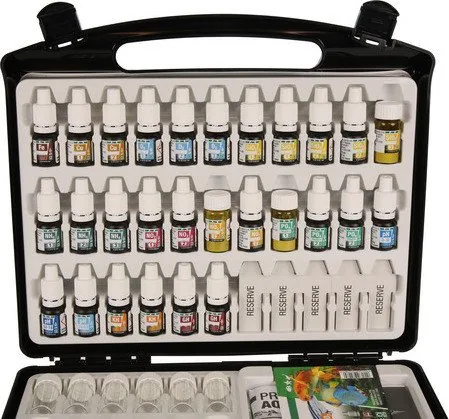
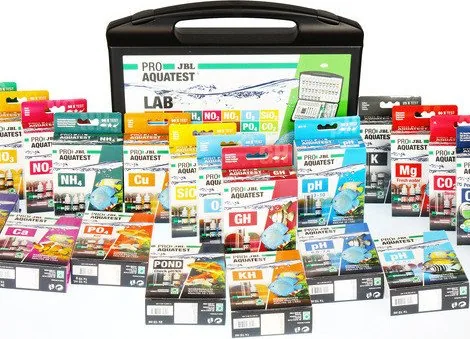
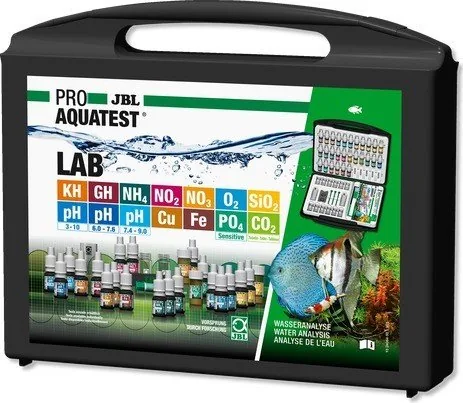
Test vody (pH (3 rozsahy), Uhličitá tvrdost, Celková tvrdost, Fosfáty, Nitrit, Dusičnany, Železo, Měď, Silikáty, Kyslík, Amonný iont, Amoniak, Nepřímý CO2), Testovací sada

Rozměry

38,20x8,51x31,80cm (ŠxVxH)

Hmotnost

1,27 kg

M: QW-35-FL

Produkt Popis

Zvládnutí chemie vody v akváriu

Udržování zdravého vodního prostředí vyžaduje přesný monitoring chemie vody pro zajištění pohody všech organismů žijících uvnitř. Manuál JBL Pro AquaTest Lab Test Case Manual poskytuje nezbytné pokyny pro nadšence, kteří požadují excelenci ve svých aquarkách pro udržování nejlepšího stavu. Tato komplexní sbírka zajistí, že vaše ryby a rostliny budou prosperovat v optimálních podmínkách poskytováním podrobných instrukcí pro různé analytické metody používané dnes.

Zásadní testovací metody pro jasnost

Kvalita vody určuje úspěch jakéhokoli akvaristického zařízení bez ohledu na konkrétní druhy, které chováte. Ať už chováte sladkovodní mořský život nebo koi z zahradního rybníka, různé parametry vyžadují specifickou pozornost pro stabilitu. Manuál podrobně popisuje sophistikované titrační a barvometrické metody navržené pro přesnost a jednoduchost použití pro každého. Titrační testy jako KH a GH používají přesné počty kapek k určení hladin tvrdosti účinně v čase. Barvometrické testy jako pH a základní živiny spoléhají na barevné tabulky pro jasné a čitelné výsledky pro rychlé kontrolu. Každý test obsahuje postupy po krocích ke snížení uživatelské chyby během procesu testování vzorků vody. Systém účinně kompenzuje zbarvení vody způsobené filtrací rašelinou nebo léčením, což zajišťuje spolehlivost i v náročných podmínkách.

Životně důležité parametry pro zdraví

Rozumění profilu vaší vody je klíčové pro prevenci nebezpečných kolísání, která škodí citlivým stvorem. Testy tvrdosti jako Pro AQUATEST GH a KH zabraňují nebezpečným výkyvům pH, které škodí citlivým stvorum významně. pH hladiny mezi specifickými rozsahy vyhovují různým druhům z kyselých sladkých vod až po alkalické mořské nádrže dokonale. Testování živin monitoruje složité dusíkové cykly jako Ammoniak, Dusitany a Dusičnany ke sledování funkce systému přesně. Hladiny Fosfátů a Silikátů pomáhají zabránit tvrdohlavým květům řas, které mohou udušit vaši nádrž a zabít ryby. Stopové prvky jako Železo a Měď jsou životně důležité pro růst, ale musí být řízeny přísně, aby se předešlo rizikům toxicity. Hladiny kyslíku zajišťují životní podporu pro ryby a bakterie zatímco CO2 hnojení napomáhá bohatému růstu rostlin v vysázených nádržích.

Údržba a opravy pro stabilitu

Udržování parametrů stabilních vyhýbá stresu a chorobným výbuchům ve vašem ekosystému v dlouhodobém horizontu. Pokud hodnoty odchylují od doporučených hodnot, příručka nabízí specifické kroky pro opravu nastavení k odstranění problémů. Příliš nízká tvrdost vyžaduje přidání minerálních solí zatímco přebytek navrhuje použití reverzní osmózy pro filtraci k redukci. Nedostatek živin potřebuje specifická hnojiva z řady ProScape dostupná pro zakoupení online snadno. Vysoké hladiny toxinů vyžadují okamžité výměny vody nebo zavedení biologických filtrů k obnovení rovnováhy rychle. Pokyny ke skladování zajišťují, že činidla zůstanou účinná pro budoucí testovací období před vypršením. Pipety musí být drženy vertikálně, aby se předešlo vzduchovým bublinám během dávkování činidel. Pravidelný monitoring zabraňuje neočekávaným překvapením ve vaší rutině údržby pro vaše nádrže. Tím, že následujete vedení manuálu JBL Pro AquaTest Lab Test Case Manual, majitelé akvária mohou dosáhnout čistota vody a stabilitu pro své mazlíčky.

M: QW-35-FL

© Copyright 2026 Manual.ly